

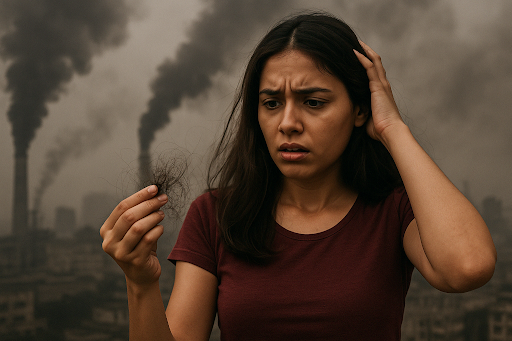
If you're living in a polluted city and noticing more hair in your shower drain or on your hairbrush, you're not alone. With increasing exposure to toxic air, researchers are now linking air pollution to a surprising consequence - hair loss. While most people attribute hair fall to genetics, stress, or diet, studies show that environmental factors like PM2.5, nitrogen dioxide (NO2), and sulfur dioxide (SO2) can severely impact scalp health and hair growth. Let’s explore how the air we breathe might be damaging our hair, and what you can do to prevent it.
How Does Air Pollution Affect Your Hair and Scalp?
1. Clogged Follicles from Particulate Matter (PM2.5 & PM10)
Fine dust particles in polluted air settle on your scalp and clog hair follicles, restricting the flow of oxygen and essential nutrients. This weakens the roots, leading to breakage and hair fall.
2. Oxidative Stress and Free Radical Damage
Pollutants generate free radicals that cause oxidative stress, damaging the scalp skin and hair follicles. This can lead to premature hair thinning and graying.
3. Increased Inflammation
Airborne toxins like NO2 and SO2 irritate the scalp, triggering inflammation that disrupts the hair growth cycle.
4. Sebum Imbalance and Itchiness
Pollution affects the production of natural oils, leading to a dry or excessively oily scalp. This disrupts the scalp’s microbiome and creates an unhealthy environment for hair growth.

Scientific Evidence Linking Air Pollution to Hair Loss
-
A 2019 study presented at the European Academy of Dermatology and Venereology found that exposure to high levels of dust and fuel particles reduced levels of beta-catenin-a key protein in hair growth.
-
Researchers at Future Science OA also identified that pollution-induced oxidative stress negatively impacts the hair growth cycle, particularly the anagen (growth) phase.
Common Signs That Pollution Is Damaging Your Hair
-
Excessive hair shedding after commuting or spending time outdoors
-
Dull, brittle hair with split ends
-
Itchy, irritated scalp with flaking
-
Premature graying of hair

Pollutants That Harm Your Hair Most
Particulate Matter (PM2.5 & PM10)
-
Clogs follicles and creates an oxygen-deficient environment
Nitrogen Dioxide (NO2)
-
Increases oxidative stress and reduces blood flow to hair roots
Sulfur Dioxide (SO2)
-
Alters scalp pH and causes irritation
Volatile Organic Compounds (VOCs)
-
Released from car exhausts and industrial smoke, triggering inflammation
Who Is Most at Risk?
-
Urban Residents living in high AQI cities like Delhi, Mumbai, and Bangalore
-
Outdoor Professionals such as traffic police, delivery agents, and construction workers
-
Commuters using public transport or open vehicles
How to Protect Your Hair from Pollution
1. Cover Your Hair Outdoors
Use a scarf or cap when commuting to shield your hair from direct exposure.
2. Use Anti-Pollution Hair Products
Shampoos and serums with antioxidants, charcoal, and tea tree oil help detoxify your scalp.
3. Wash Hair Regularly with Mild Shampoo
Prevent buildup of pollutants and sweat with gentle, sulfate-free cleansers.
4. Hydrate and Nourish from Within
A diet rich in vitamins A, E, and Omega-3 fatty acids supports hair health.
5. Use Air Purifiers
Improving indoor air quality can reduce overall pollutant exposure, especially while sleeping. Use hepa air purification at home and wear portable air purifiers like atovio when stepping out.

Clean Hair, Clear Air
Hair loss is no longer just a genetic or hormonal issue-it’s increasingly becoming an environmental health concern. As air pollution continues to rise, protecting your hair and scalp is just as important as protecting your lungs. By taking small, consistent steps, you can fight back against pollution-induced hair damage and promote healthier, stronger hair.
Breathe clean, live clean, and protect your hair from the invisible harm in the air.

Share:
Understanding PM2.5 & PM10: The Hidden Dangers of Air Pollution on Your Health
Why Your ‘Natural’ Agarbatti & Mosquito Coils Are Harming You