

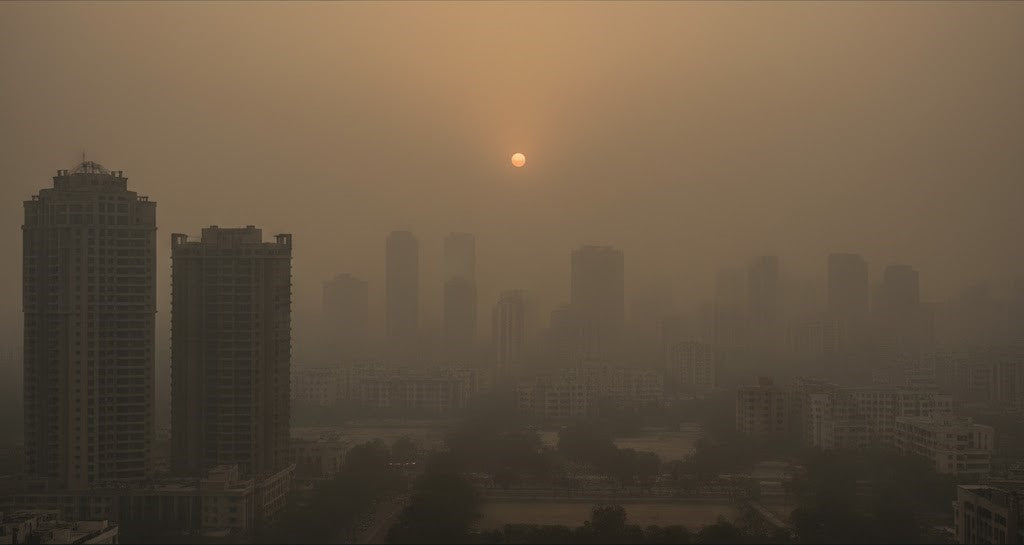
Ever noticed how your weather app suddenly turns angry red every December? That AQI number that sat comfortably at 60 during summer now screams 250. Your throat feels scratchy. Eyes water for no reason.
Winter air pollution isn't just worse – it's dramatically worse. Nope, not in your head. The air really is that much worse. Let me break down why.
What Happens to Air During Winter?

Cold air behaves differently than warm air. Physics, basically.
During summer, warm air rises and carries pollution up and away. Like opening a chimney – smoke goes up and out. But winter flips this entire system.
Temperature inversion – fancy name for what's basically an atmospheric trap. Warm layer on top, cold layer below. Cold air can't rise. Pollution can't escape. You're stuck breathing it all.
The pollutants have nowhere to go. Just keeps piling up. Delhi hits 300-400 most December mornings. Mumbai drops hard too, though not quite that bad. Even Bangalore sees numbers climb during winter months.
It's not that winter produces more pollution. Same cars, same factories. But the atmosphere stops dispersing everything.
Why Is Morning Smog So Bad?

You step outside at 7 AM and can barely see across the street. By noon, visibility improves.
Overnight, the ground cools down fast. Everything settles. By morning, you've got maximum pollution trapped at ground level – right where you're breathing.
As the day warms up, that inversion layer weakens. Some mixing happens. Your weather air quality reading might drop from 220 to 160 by afternoon.
Then evening hits. Temperature drops again. Traffic peaks. And the cycle repeats.
This is why checking AQI once in the morning doesn't cut it during winter.
What Pollutants Increase Most?

PM 2.5 runs the show during Indian winters. Tiny stuff from cars, factories, anything burning really. Same amount gets produced year-round. Winter just won't let it leave.
And these particles? About 30 times thinner than a strand of hair. Your nose can't filter them. They go straight into your lungs.
PM10 levels also spike. Bigger dust particles, construction debris, road dust. Usually your respiratory system can handle some PM10. But when concentrations get this high for weeks, even that natural defense gets overwhelmed.
Check your local AQI breakdown sometime. Winter? It's almost always PM 2.5 driving that score up.
Can Weather Make It Worse?
Absolutely.
Low wind speed = pollution accumulates faster High humidity = particles get heavier, settle near ground No rain for weeks = nothing washing pollutants out High pressure systems = trap air even more effectively
Delhi's geography makes this brutal. Landlocked, no coastal breeze to clear things out. When a high-pressure system parks itself over North India for two weeks, air quality just collapses.
Mumbai has it slightly better. Sea breeze provides some ventilation, even in winter. Bangalore sits at higher altitude with better natural ventilation. Still, both see winter AQI spikes.
Does Indoor Air Quality Drop Too?
You'd think staying inside protects you. Sometimes it makes things worse.
Indoor air quality during winter gets tricky. Closed windows trap indoor pollutants – cooking smoke, gas stove emissions, cleaning products.
Plus, outdoor pollution seeps in anyway. Buildings aren't airtight. That 250 AQI outside? You're probably breathing 150-180 inside, even with windows closed.
And because it's cold, nobody opens windows. Whatever's building up inside just stays there.
This is why indoor vs outdoor air quality matters more during winter than any other season.
How Does Winter Compare to Summer?
Summer has its own pollution. More ozone on hot days. Construction activity peaks. Dust storms.
But summer air moves. Heat creates convection currents. Pollution rises, disperses, mixes with cleaner air at higher altitudes.
Winter? Everything just accumulates. Monday's pollution adds to Tuesday's adds to Wednesday's. Unless wind or rain breaks the pattern, you're breathing a week's worth of accumulated pollutants all at once.
Cold weather pollution isn't from more sources. It's from the same sources plus atmospheric conditions that refuse to clear anything out.
Does Rain Help?

Rain is the reset button everyone waits for.
PM 2.5 and PM10 particles literally get washed out of the air. Even a moderate rain shower can drop AQI by 100+ points in a few hours.
The effect lasts until pollution builds up again. Which in Delhi might be 24 hours. In smaller cities, maybe 2-3 days.
After good winter rain, you'll see those rare green AQI days. Air feels crisp. You can actually see distant buildings.
Because honestly, during peak winter, it kind of is a miracle.
Are Certain Times Worse Than Others?
Morning and evening – rush hour plus temperature inversion creates the perfect storm.
Early morning (6-9 AM): Everything from overnight gets trapped at ground level, then morning traffic adds more. Literally the worst time for a run.
Mid-morning to afternoon (10 AM-3 PM): Things loosen up a bit as the day warms.
Evening (5-9 PM): Temperature drops again, evening traffic peaks, cooking emissions. Second-worst period.
Check weather air quality apps multiple times daily during winter. That morning reading of 150 might be 220 by evening.
Should You Wear Masks During High AQI Days?

N95 masks actually work for PM 2.5. Not perfectly, but they filter out most particles if worn properly.
"Properly" matters. Has to seal against your face. No gaps. And you need to actually replace them.
Cloth masks don't do much for PM 2.5. Too porous. Surgical masks fall somewhere in between.
Above 200 AQI, masks start making genuine sense for anyone planning to be outside for extended periods.
Do Air Purifiers Actually Help?
Indoor air quality can be controlled, unlike outdoor air.
HEPA filter air purifiers remove PM 2.5 effectively. You need one appropriately sized for your room – those tiny desk units don't cut it.
Run them continuously during high pollution days. Air quality degrades slowly but constantly. Purifiers need time to filter the full room volume multiple times.
They don't solve outdoor pollution. But spending 8 hours sleeping in filtered air makes a real difference compared to breathing 250 AQI all night.
Plants don't really purify air meaningfully. You'd need a literal forest in your living room.
What Can You Actually Do?
Individual action won't fix atmospheric conditions. But you can protect yourself:
-
Check AQI before planning outdoor activities
-
Schedule morning walks for mid-day when inversion weakens
-
Use N95 masks when AQI crosses 200
-
Run air purifiers overnight at minimum
-
Avoid heavy exercise outdoors on bad air days
BeyondAQI shows real-time, location-specific readings across Indian cities. Not city-wide averages – actual neighborhood-level data.
Because Gurgaon's air can be completely different from East Delhi's air on the same day. And knowing what you're actually breathing in your specific location matters more than some averaged number.
That number on your weather app isn't random. It's physics, geography, and atmospheric science all colliding every winter. Now you know what you're actually looking at.
Stay aware. Stay protected when needed. And maybe check BeyondAQI before heading out tomorrow morning.

Share:
The Complete Guide to Nasal Strips: Better Sleep, Stronger Breathing, and Healthier Living
How to Read AQI: Understanding Air Quality Numbers, Colors & Guide
2 comments
In Romania, the winter morning frost has begun to smell like the smell of wood that is not wood, it is the cyanide of smokers, in the future strong cigarettes will destroy oxygen and the planet.
yvy5dn