


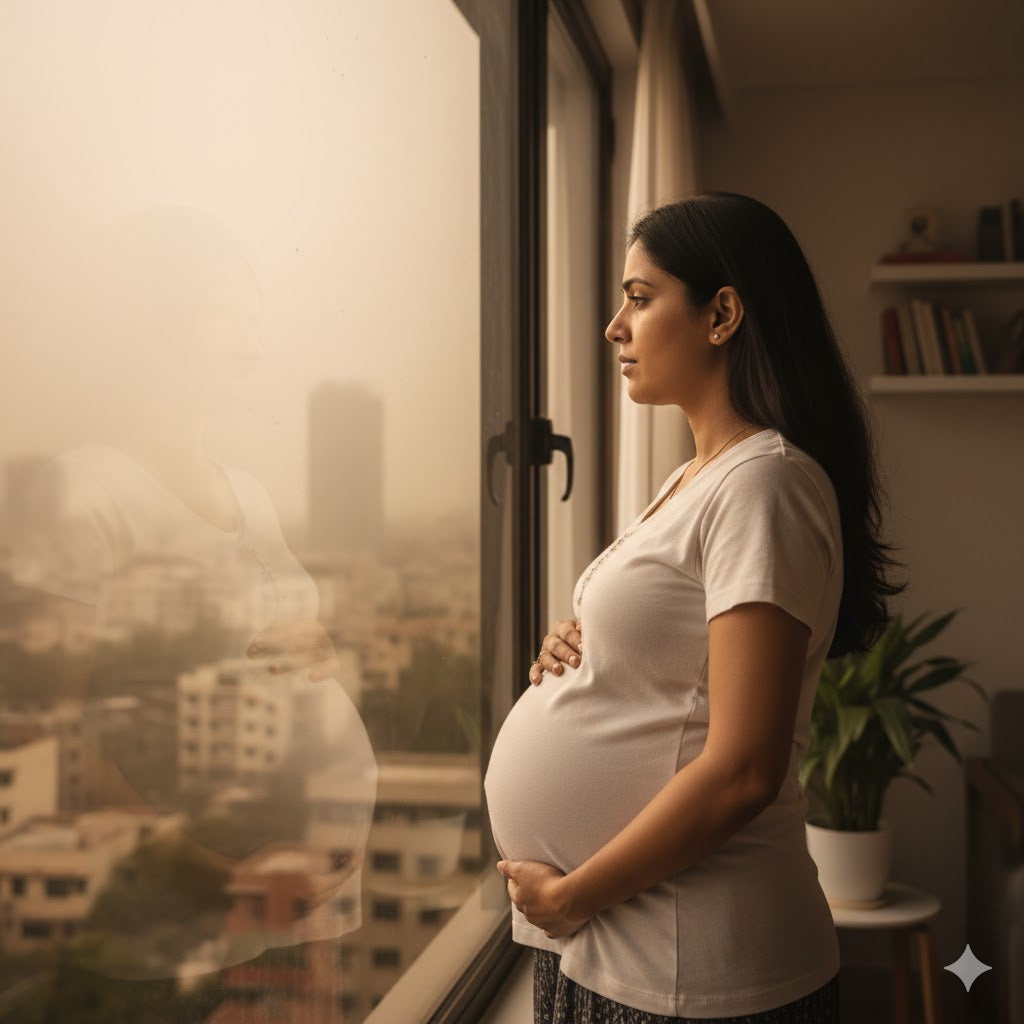
When a routine prenatal checkup shows your baby's growth measurements falling behind doctors are asking a new question more and more and What is the air quality like where you live? In cities across India where AQI routinely hits 300 or worse this is not an unusual question anymore. It has become standard.
The connection between maternal pollution exposure and fetal development is no longer theoretical. Medical research has established that air pollution effects on human health during pregnancy extend beyond the mother and directly affect the developing baby through placental transfer.
Every breath a pregnant woman takes during those critical nine months shapes her baby's future health. Understanding this connection and taking protective measures has become essential for expecting mothers in urban India.
TL;DR
PM2.5 particles cross the placental barrier. Research confirms this. They reach your developing baby directly through maternal circulation.
The documented risks:
-
Low birth weight: 100-200 grams lighter on average
-
Premature birth risk: 25% increase with chronic exposure
-
Gestational complications: 30% higher in areas with AQI above 200
-
Long-term effects: Cognitive delays, childhood asthma (2x rate), immune weakness
This isn't theoretical concern. This is medical research from Delhi and Mumbai hospitals tracking thousands of pregnancies in high pollution zones.
Protection matters during all three trimesters. Details below.
Air Pollution in Pregnancy: What Every Expecting Mother Should Know
Research reveals something deeply concerning and PM2.5 particles can cross the placental barrier. Scientists are finding pollution particles in placentas, umbilical cord blood and developing fetal organs.
Air pollution does not just affect maternal health. It directly reaches the developing baby.
Placental transfer occurs because PM2.5 particles which are 2.5 micrometers enter the bloodstream. Once in maternal circulation they cross into fetal circulation. The placenta cannot effectively filter these ultra fine particles can it.
Critical development windows:
First trimester: Major organs form during this period. Pollution exposure can disrupt development. Research documents higher miscarriage rates during elevated pollution months.
Second trimester: Rapid growth phase. Pollution can restrict growth leading to low birth weight infants.
Third trimester: Brain development accelerates. Pollution affects cognitive development and neural pathways being established.
Pregnant women breathe around 40% more air than usual. Immune system changes increase susceptibility to inflammatory responses from pollutants.
Effects of Air Pollution on Pregnancy: What Research Shows
Medical research presents concerning findings.
Maternal health complications:
Gestational hypertension risk increases 15 to 20% in elevated pollution areas. Preeclampsia shows a strong link with PM2.5 exposure. Gestational diabetes rates run higher in polluted cities. And hospitalization rates? Those spike too.
A Delhi hospital study tracked this and found women living in high AQI areas which is above 200 on average had 30% more complications. Mumbai research connected traffic pollution directly to premature labor.
Fetal development risks:
Low birth weight is most common. Babies born to mothers dealing with high pollution exposure come out 100 to 200 grams lighter on average. That might not sound like much but it increases health risks significantly.
Premature birth risk which is before 37 weeks jumps 25% with chronic exposure. Intrauterine growth restriction happens when your baby just is not growing at the rates they should be.
Long term impacts include:
-
Cognitive development delays
-
Autism spectrum links
-
Childhood asthma predisposition and twice the rate actually
-
Immune system weakness
-
Cardiovascular issues in adulthood
Understanding the asthma connection is critical. Research confirms air pollution causes asthma development in children, with prenatal exposure doubling the risk.
How Air Pollution Affects Human Health During Pregnancy
How air pollution affect human health during pregnancy operates through interconnected pathways.
Oxidative stress impacts the entire physiological system. Placental inflammation reduces efficiency. Blood flow decreases. Nutrient transfer slows. Oxygen delivery diminishes.
Pollutants of greatest concern:
PM2.5 crosses the placental barrier directly. Carbon monoxide reduces oxygen availability. Nitrogen dioxide causes inflammatory responses affecting placental function. Ozone creates respiratory stress. Heavy metals affect fetal brain development.
How to Protect Your Health from Air Pollution When Pregnant
Home Environment Optimization
Indoor air quality control becomes particularly important during pregnancy.
Bedroom protection:
Stationary purifier near bed. Keep windows closed during peak pollution hours which is 7 to 10 AM and 6 to 9 PM. Pregnancy safe plants. Regular HEPA vacuum cleaning.
Kitchen considerations:
Gas stoves generate significant PM2.5 every time you cook. Always use exhaust fans. Avoid deep frying. Have family assist during peak pollution months.
Nursery preparation:
Paint during lower pollution seasons. Use low VOC paints. Air out for weeks before use.
Smart Timing and Activity Planning
Check AQI before outdoor activities. Download BeyindAQI.
Optimal outdoor times:
Late morning which is 10 AM to 12 PM. Early afternoon which is 1 to 3 PM. Avoid morning rush which is 7 to 10 AM and evening rush which is 6 to 9 PM.
Exercise timing:
Indoor alternatives are safer honestly. Prenatal yoga at home. Mall walking. Swimming when available.
Commute and Travel Protection
Work from home if possible. If commuting is necessary, car AC should be on recirculation mode. Avoid two wheelers completely. Schedule checkups during lower pollution hours.
Nutrition and Supplementation
Anti pollution diet:
Antioxidant rich foods. Prenatal vitamins which is Vitamins C and E. Omega 3 fatty acids. Folate rich foods. Maintain 8 to 10 glasses of water daily.
Beneficial foods:
Amla. Green leafy vegetables. Berries. Turmeric in moderation. Walnuts.
Medical Monitoring
Inform obstetrician about high pollution exposure at first visit. More frequent checkups if in heavily polluted areas. Regular fetal growth monitoring. Report respiratory symptoms immediately.
Diseases Caused Due to Pollution: Prevention During Pregnancy
Diseases caused due to pollution affecting babies begin before birth. Prevention is the only safe approach since medication options are extremely limited.
Protection from air pollution safeguards both maternal and fetal health. Long term prevention begins in the womb and reduced childhood asthma risk, potentially preventable developmental disorders, minimized immune weakness.
Month by Month Protection Plan
Months 1 to 3: Critical Foundation Period
Outdoor exposure management:
Limit activities during high AQI hours which is 6 to 10 AM and 6 to 10 PM. Check AQI before stepping out. Postpone non essential errands if AQI exceeds 150. Keep outdoor trips under 30 minutes.
Indoor air safety:
Install air purifiers in bedroom and living room. Keep windows closed during peak hours. Use exhaust fans while cooking. Skip the incense and strong chemical cleaners. Your baby does not need that extra exposure.
Personal protection:
N99 or N95 masks are mandatory when you are outside. Period. Do not skip them.
Lifestyle adjustments:
Schedule appointments for mid day when pollution tends to be lower. Order groceries and essentials for home delivery when AQI is terrible. Why expose yourself unnecessarily right? Stay hydrated with 8 to 10 glasses water. Include antioxidant rich foods.
Months 4 to 6: Steady Growth Phase
Outdoor guidelines:
Maintain protective measures during necessary outings. Morning walks only when AQI is below 100. Always wear N99 mask during commutes especially in auto rickshaws or buses.
Indoor quality:
Continue running purifiers 24/7 in frequently used rooms. Add indoor plants like spider plant and aloe vera. Vacuum and dust regularly. Ensure proper bathroom ventilation.
Hygiene maintenance:
Wash hands after returning home. Change into clean clothes as soon as you get home. Shower before bed. If the air feels dry run a humidifier.
Nutrition:
Up your Vitamin C intake with oranges, lemon water and amla. Add omega 3 rich foods like walnuts and flaxseeds. Turmeric milk at night helps. Green tea gives you antioxidants throughout the day.
Medical monitoring:
Do not miss prenatal checkups. If you are feeling any respiratory discomfort bring it up immediately. Track fetal growth regularly. And if you are living in a high pollution zone ask about inflammation marker tests.
Months 7 to 9: Critical Brain Development Phase
Enhanced protection:
Never skip masks during hospital visits or when you are in crowded places. Medical grade masks are not negotiable. Keep a clean N99 mask packed in your hospital bag already. Avoid public transport during rush hours and take a personal vehicle or cab instead. Daily urban exposure requires strategic planning. Learn evidence-based strategies for surviving polluted cities including optimal timing, commute protection, and lifestyle modifications.
Home preparation:
Get that nursery set up with a dedicated purifier running 24/7. Deep clean everything but use non toxic products only. Wash all baby items before use. Carpets? Either remove them or vacuum thoroughly.
Hospital bag essentials:
Pack 3 to 4 N99 masks and one for you, extras for your birth partner and just in case. Hospital grade hand sanitizer. Clean clothes in sealed bags to avoid pollution exposure. Wet wipes for quick cleaning.
Final weeks:
Minimize outdoor exposure. Have someone else handle errands. Stock groceries and essentials. Prepare frozen meals. Keep emergency numbers and AQI app handy.
Post delivery planning:
Arrange postpartum help to limit outdoor exposure. Continue purifiers in baby's room. Plan checkups during low pollution hours. Keep protective gear ready. Consider breastfeeding in well ventilated purified room. After birth, your baby's lungs remain highly vulnerable. Our comprehensive guide on protecting children from air pollution covers newborns through teenagers with age-specific strategies.
Air pollution effects on human health during pregnancy are well documented. Pollution crosses the placental barrier affecting the baby directly. Prevention represents the only safe approach. Combined with home air quality control, proper masking, and strategic planning these approaches reduce exposure risks significantly for both mother and baby. Your baby's health starts now not after birth.

Share:
Urban Air Quality: 12 Science-Backed Ways to Protect Your Health in Polluted Cities
Air Pollution for Kids: Essential Protection for Children's Developing Lungs