


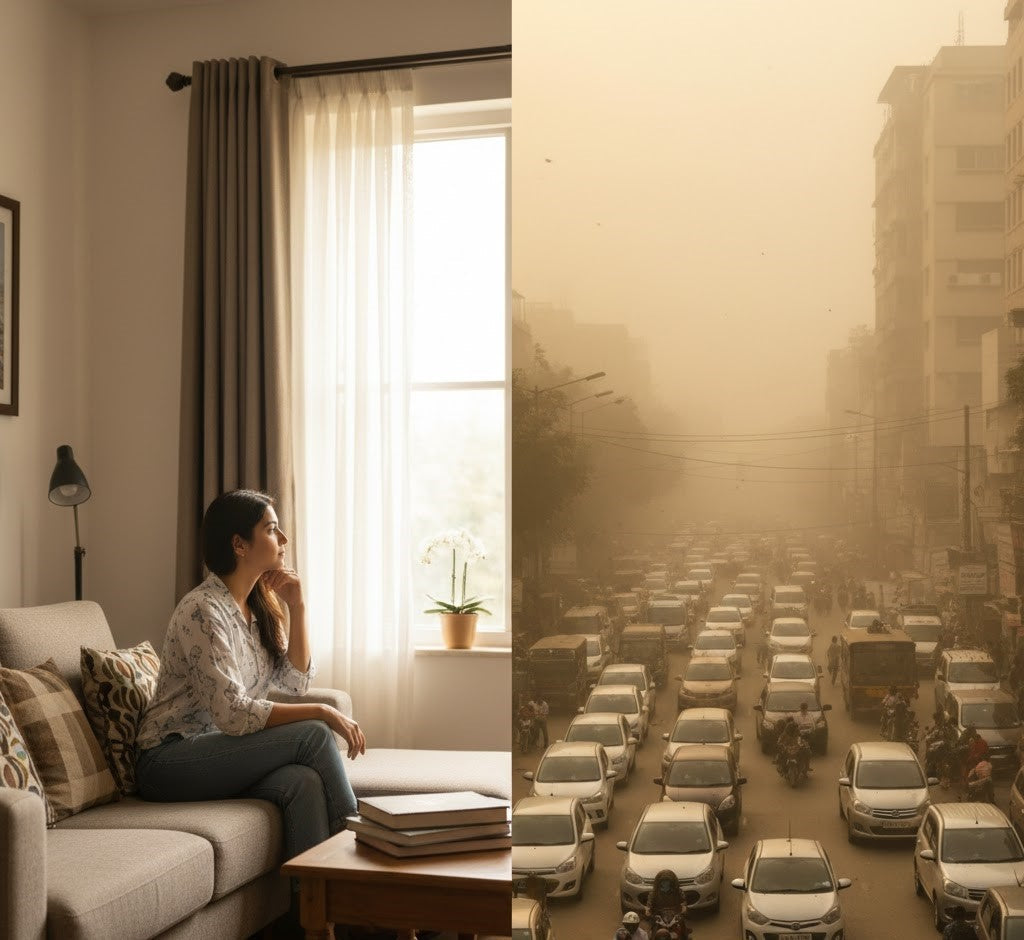
Research from the Environmental Protection Agency reveals something that challenges common assumptions and the air inside your home is frequently 2 to 5 times more polluted than the air outside.
This finding contradicts what most people believe about their homes being safe havens from outdoor pollution right.
All those years spent checking outdoor AQI before stepping out, wearing masks during poor air quality days and avoiding morning walks during smog? Meanwhile the air inside bedrooms and kitchens was potentially causing equal or greater damage. Because indoor air pollution in Indian homes represents its own substantial health threat and most households remain completely unaware.
Years were spent obsessing over outdoor air pollution while bedroom air quality and kitchen air quality never received consideration.
Until an indoor air quality monitor revealed numbers spiking to 250+ during every dinner preparation. That measurement provided the necessary wake up call.
TL;DR
EPA research shows indoor air is 2 to 5x more polluted than outdoor air. You spend 90% of your time indoors. That bedroom purifier cleaning one room while you cook, commute, and work elsewhere? Massive protection gap.
The coverage problem:
-
Kitchen AQI hits 250+ every time you cook. Gas stoves release PM2.5 directly into your breathing space.
-
Traditional solutions work in one location only. Home purifier OR outdoor mask. Never both.
-
You are unprotected 12+ hours daily during transitions between environments.
-
Stationary purifiers cannot follow you. Masks are uncomfortable for long periods.
This is not theory. This is EPA data from measured air quality in real homes and real commutes across urban India.
Want to know how to protect yourself everywhere? The complete solution below. This protection strategy integrates with our comprehensive 8-layer system for protecting yourself from air pollution covering all exposure scenarios throughout your day.
The Shocking Truth About Indoor Air Pollution
EPA research established that indoor air pollution frequently measures 2 to 5 times worse than outdoor levels. In certain cases measurements reach up to 100 times worse actually.
The concerning reality and we spend around 90% of our time indoors. Therefore even when outdoor AQI reaches terrible levels exposure to whatever pollutes home air remains significantly higher.
Why Indians underestimate this problem is understandable. Outdoor air pollution is visible you can see the smog. Urban residents face compounded challenges. Our guide on surviving air pollution in polluted cities provides 12 evidence-based strategies tested across India's most polluted metros. PM2.5 particles floating around living rooms cannot be seen with naked eyes can they.
Indoor air pollution in Indian homes originates from sources most households use daily:
Gas stove cooking: Every time that burner ignites it releases PM2.5, nitrogen dioxide and carbon monoxide into the air. That smoky smell after making rotis? That represents pollution just inhaled.
Incense and dhoop: Traditional practices certainly. But burning anything indoors releases particles and VOCs into breathing air.
Poor ventilation: Most Indian apartments feature inadequate airflow. Pollution becomes trapped with nowhere to disperse.
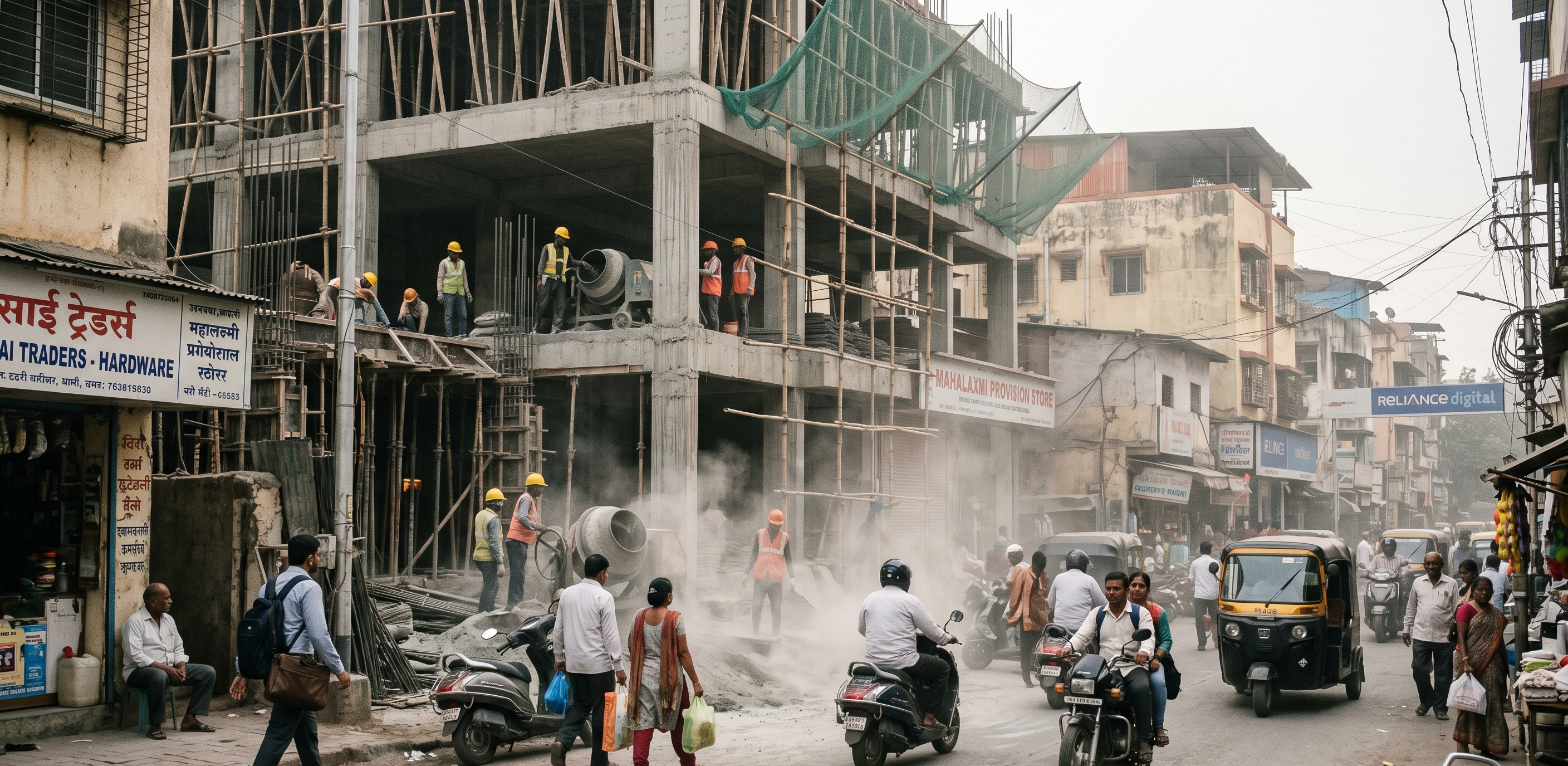
Construction dust: That building under construction next door? All that dust infiltrates your house as well.
Furniture and paint: New furniture releases VOCs for months after purchase. That new furniture smell? Those are chemicals off gassing into your air.
The confined space effect intensifies the problem. Outdoor pollution disperses across kilometers. Indoor pollution concentrates within your 1000 square foot apartment.

Understanding Outdoor Air Pollution Sources
Make no mistake outdoor air pollution remains absolutely severe in Indian cities as well.
Vehicle emissions constitute the primary culprit. Every car, truck, auto rickshaw and motorcycle burning fuel concentrated on crowded roads during rush hour periods. If you are commuting during peak traffic you are breathing concentrated doses of nitrogen oxides, particulate matter and unburned hydrocarbons.
Industrial pollution adds to the burden. Depending on your city location factories, power plants and construction sites all pump pollutants into the atmosphere.
Seasonal factors intensify the problem:
Stubble burning (October to November): Punjab and Haryana farmers burning crop waste with smoke traveling to Delhi and neighboring cities.
Firecracker pollution: Diwali transforms air quality to hazardous levels for extended periods.
Winter temperature inversion: Cold air traps pollutants near ground level causing AQI to spike above 400.
Sources of outdoor air pollution vary by geographic location as well. Industrial cities like Kanpur demonstrate different pollution profiles than traffic heavy metros like Mumbai right.
Peak outdoor pollution times follow predictable patterns:
Morning rush hour from 7 to 10 AM consistently registers as worst. Evening traffic from 6 to 9 PM produces the second daily spike. Winter mornings experience temperature inversion compounding the problem. Afternoons usually show some pollutant dispersal providing relatively better conditions.

Health Impact Comparison: Indoor vs Outdoor Exposure
So which actually causes worse health damage? Both damage health through different mechanisms and the cumulative effect presents the truly frightening aspect.
What Breathing Indoor Polluted Air Can Cause
Short term indoor air pollution effects include headaches, fatigue, eye irritation and throat scratchiness. Sick Building Syndrome represents a real phenomenon that feeling of being unwell that mysteriously improves upon leaving your home or office.
Long term chronic exposure leads to asthma development, respiratory infections and allergies. The connection between pollution and asthma is scientifically proven. Research shows breathing polluted air can cause asthma, not just trigger attacks in existing cases. Children and elderly populations experience the hardest impact.
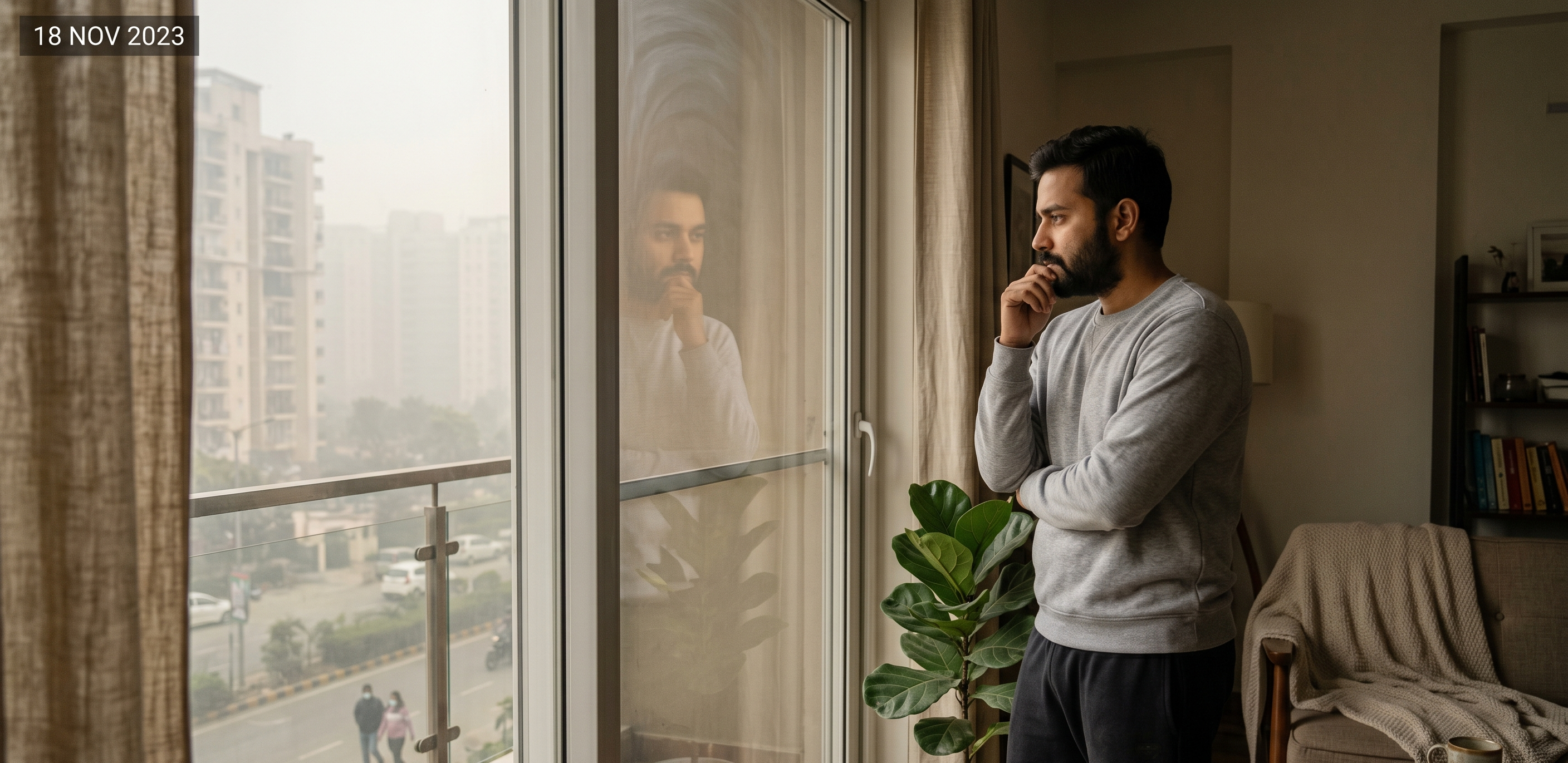
A pattern emerged where feeling fine outdoors but developing a persistent cough at home became noticeable. Investigation revealed bedroom air consistently measured above 150 AQI during sleep. For eight hours. Every single night.
Outdoor Pollution Health Consequences
Outdoor air pollution causes immediate respiratory tract inflammation, cardiovascular stress and reduced lung function. Those burning eyes and tight chest sensations during your commute? Those represent acute exposure effects.
Long term consequences include increased risk of heart disease, stroke, lung cancer and chronic respiratory diseases. Studies demonstrate that commuters experience higher exposure than people remaining indoors assuming indoor air maintains cleanliness which often is not the case.
The Compounding Effect Nobody Discusses
Here is what makes this particularly dangerous and indoor and outdoor air pollution exposure is not separate. It is cumulative.
You breathe polluted outdoor air during your commute. Then you arrive home and breathe polluted indoor air. Your lungs never receive recovery breaks do they. The damage compounds over years.
Because most people do not realize their indoor air contains pollution they implement zero protective measures against it. At minimum with outdoor pollution you might wear a mask on particularly poor days. But indoors? Nothing gets done.
Why Traditional Solutions Only Solve Half the Problem
The assumption of having everything figured out with a home air purifier and an N99 mask proved incorrect. That approach still left massive protection gaps.
Home Air Purifiers: The Indoor Only Limitation
Traditional air purifiers perform excellently. Mine cleans bedroom air beautifully. But it is stationary. Plugged into one specific room. It provides no assistance during:
My 60 minute daily commute. Eight hours at the office. Walking to the grocery store. Cooking in the kitchen unless willing to drag a purifier around constantly.
Additionally they are expensive to place in every room. And those HEPA filters require replacement every few months at ₹3,000 to 5,000 each. Costs accumulate rapidly.
Masks: The Outdoor Only Limitation
N99 masks function effectively for outdoor air pollution. But they are impractical indoors. You cannot wear a mask at home throughout the day. You appear ridiculous wearing one in the office. And after 2 to 3 hours the breathing resistance becomes genuinely exhausting.
Social stigma remains real as well. Pre COVID people considered you paranoid. Post COVID mask fatigue is widespread.
The Coverage Gap
Consider your actual daily schedule:
Morning commute (1 hour): Unprotected or wearing uncomfortable mask Office (8 hours): No personal air quality control Evening return (1 hour): Exposed again Home evening (4 hours): Perhaps one room has a purifier Sleep (8 hours): Bedroom purifier running
You are only actually protected for around 12 hours out of 24. And even that assumes your bedroom purifier works effectively and you are not cooking or performing activities that generate indoor pollution.

Finally. Protection That Follows You Everywhere.
From bedroom to commute to office and back — seamless 24/7 air protection.
Close the GapOutdoor and Indoor Air Pollution: You Need Protection Everywhere
This realization revealed that traditional approaches were not sufficient.
Because the genuine problem is not just indoor air pollution or outdoor air pollution separately. It is the reality that you move between both environments constantly throughout your day and most solutions function in only one location.
What actually solves this challenge? Portable protection that moves with you.
Wearable air purifiers have transformed the approach to the everywhere problem by providing continuous protection regardless of location.
How Wearable Protection Works
Creates a personal clean air zone around your breathing space. Around 35 cubic feet of cleaner air that follows wherever you go.
Seamless transition example from actual daily routine:
Morning: Wake up in bedroom and small stationary purifier near bed maintained clean air overnight. Make breakfast and wear Atovio Pebble while cooking because gas stove smoke is substantial. Commute to office and Pebble continues protecting during metro ride and walk.
Office Hours: Desk work and Atovio Oasis purifier sits on desk creates clean zone during work. Meetings in conference rooms and carry Pebble because unknown air quality in different rooms. Lunch walk outside and Pebble active for outdoor exposure.
Evening: Return commute and Pebble protection again. Cooking dinner and wear it because cooking generates substantial PM2.5. Relaxing at home and switch to stationary Oasis or continue wearing Pebble. Sleep and return to bedroom purifier.
The Filter Free Advantage
Many wearable air purifiers use filter free technology which offers significant advantages over traditional filter based systems.
Filter free devices have zero recurring costs. You purchase them once and use them for years without worrying about replacement filters. This is particularly beneficial for portable devices that you use daily.
Look for devices with proper testing credentials. IIT Kanpur and FARE Labs certifications validate effectiveness and safety. Zero ozone emission verification is important because some ionizers generate ozone as a byproduct which itself constitutes a pollutant.
These filter free wearable options are safe for continuous use both indoors and outdoors making them practical for daily protection.

Building Your Complete Protection Strategy
What does a complete pollution protection system actually look like in practical implementation?
For Daily Commuters
You need portable plus stationary coverage. A wearable purifier that accompanies you everywhere during commutes and outdoor activities. A quality room air purifier for your bedroom or workspace. An N99 mask as backup for extreme 300+ AQI days.
For Work From Home Individuals
Stationary purifier at your work desk represents baseline protection. Portable option for cooking times and measure your kitchen air while cooking and you will be surprised honestly. Portable protection for any trips outside during home cleaning when you are stirring up accumulated dust.
For Parents with Kids
Portable purifiers for children's school commute because they breathe faster and inhale more pollutants per body weight. Children need specialized protection strategies. Our detailed guide on protecting children from air pollution covers school commutes, developmental concerns, and creating safe environments. Stationary purifier in study room. Teaching children to check AQI and understand protection importance.
Total investment remains less than one smartphone and it protects something genuinely irreplaceable which is your respiratory system.
IIT Kanpur Tested. Zero Ozone. Zero Filters.
90% pollution reduction in 8 minutes — science-backed protection you can wear.
Get Complete CoverageScientific Evidence: Why Indoor and Outdoor Environments Need Attention
WHO maintains clear position statements on indoor air pollution being a major health risk especially in developing countries where solid fuel cooking remains common. Even gas cooking in modern homes generates significant pollution.
Studies on commuter exposure consistently demonstrate that people who commute experience higher pollution exposure than those who remain indoors or outdoors in one location because they are receiving impact from both environments.
Research on cumulative effects demonstrates that total exposure time matters more than peak exposure. Meaning eight hours breathing 100 AQI proves worse than one hour breathing 300 AQI.
IIT Kanpur's validation of anion technology offers an alternative to traditional HEPA filtration. FARE Labs' zero ozone certification addresses the main safety concern regarding ionization technology.
Neither indoor air pollution nor outdoor air pollution receives exemption. Both damage your health daily. Traditional solutions leave coverage gaps throughout your day. Wearable technology plus strategic stationary purifiers finally solve the everywhere problem. Your lungs do not stop functioning when you step outside so why should your protection stop right?


Share:
Air Pollution for Kids: Essential Protection for Children's Developing Lungs
Air Pollution Diseases: Can Pollution Really Cause Asthma?
1 comment
cnh80n