

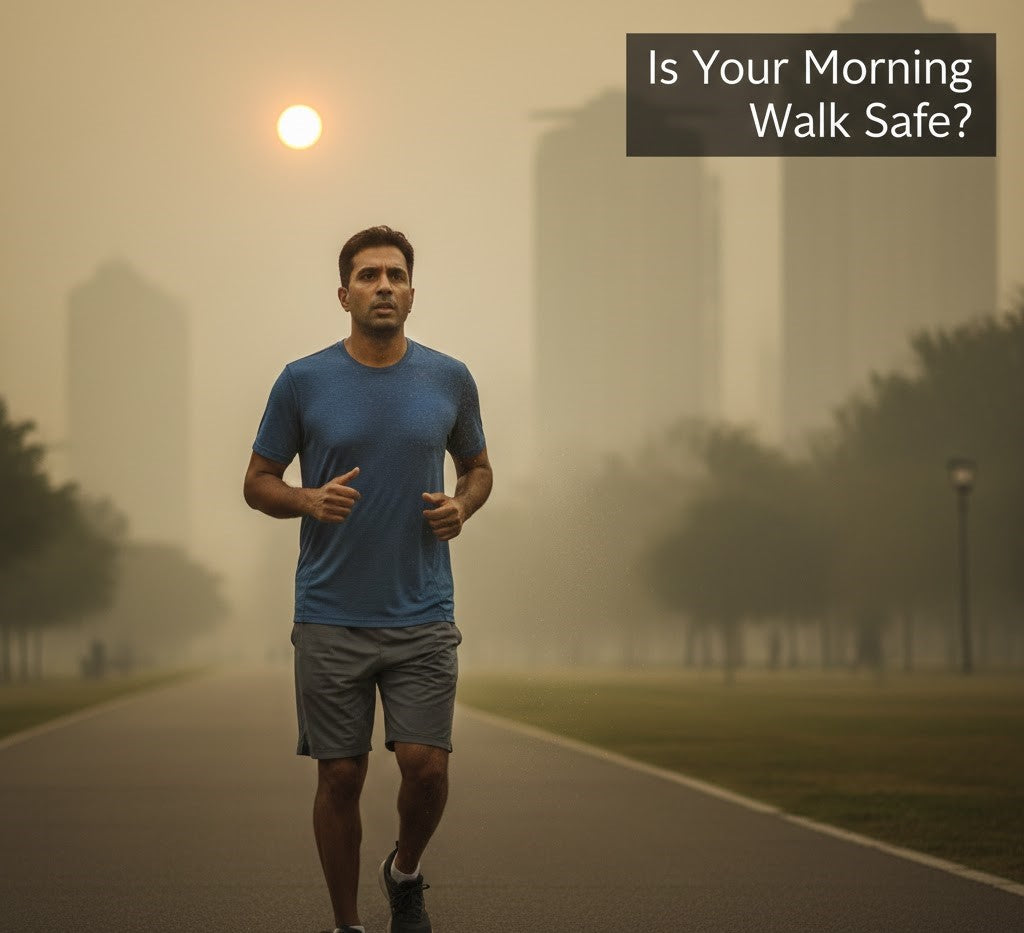
That morning walk you have been skipping because of visible smog? You are not alone honestly. Millions across Delhi Mumbai Bangalore deal with this every morning. You look outside, see that haze, and think maybe skip today.. But then guilt hits because exercise matters right. Here is the question, is walking in pollution safe or stay indoors? Here is what makes this tricky, exercise increases breathing rate 10 to 15 times which means 10 to 15 times more polluted air entering lungs during that walk. But staying inside not exercising, that has its own problems too. Cardiovascular issues start building up, weight gain happens, your fitness declines. So which damages you more really, skipping exercise or breathing polluted air? It depends on AQI that day, timing, and protection. Some days walking is fine, some days need protection gear, some days not worth the risk. Want to know when walking outside is safe? Keep reading.
TL;DR
Walking in polluted air requires smart timing and route planning actually. Temperature inversions trap pollution at ground level from 6am to 10am making morning walks riskiest. The midday window 11am to 3pm offers 30 to 40% cleaner air. Park routes reduce exposure versus main roads too.
The exercise dilemma:
-
AQI below 100: Exercise normally with precautions
-
AQI 100 to 150: Reduce intensity and duration by 30 to 40%
-
AQI 150 to 200: Light walking only, avoid cardio completely
-
AQI above 200: Indoor alternatives mandatory no exceptions
Your breathing rate during exercise increases 10 to 15 times versus resting right. That multiplies pollutant intake by 10 to 15 times too. Benefits of moderate exercise outweigh risks below AQI 150 for healthy adults sure. Above that threshold though, lung damage can exceed cardiovascular gains.
Want to know when and how to exercise safely? Keep reading.
Is Outdoor Exercise Really Dangerous in Polluted Cities?
Here's what happens when you exercise in polluted air.. Your breathing rate increases 10 to 15 times compared to resting. That means 10 to 15 times more air moving through your lungs every minute. In polluted conditions you're pulling 10 to 15 times more PM2.5 and PM10 and nitrogen dioxide deep into lung tissue. Ten to fifteen times more pollution going straight into your body.
And during exercise you breathe through your mouth not your nose. Your nose has natural filtration systems that trap larger particles actually. Mouth breathing bypasses all of that completely. Pollutants go straight into airways where they cause immediate inflammation and long term scarring over years of exposure.
The pollutants you encounter during outdoor exercise include particulate matter from vehicles and construction dust, nitrogen oxides from traffic exhaust, carbon monoxide, volatile organic compounds, and ground level ozone building up in the air. PM2.5 particles are small enough to cross from lungs into bloodstream honestly. And during exercise when blood flow increases way more, more particles get absorbed systemically throughout your body.
Should I Walk When AQI is High? Understanding Safe Limits
The question is should I walk when AQI is high and the answer depends on how high it actually is, what your health status looks like, and what precautions you take.
AQI 0 to 50 means good air quality. Exercise normally. These days are rare but take full advantage when they happen right.
AQI 51 to 100 means moderate air. Most healthy adults can exercise with minimal adjustments really. Time your walk for mid day when pollution is lower naturally.
AQI 101 to 150 means unhealthy for sensitive groups. If you have asthma or respiratory conditions this is your cutoff basically. Healthy adults can walk but reduce duration and intensity by 30 to 40% at least. Skip high intensity cardio completely.
AQI 151 to 200 means unhealthy for everyone honestly. Light walking acceptable for short periods but avoid increasing breathing rate significantly. No running no jogging.
AQI above 200 means very unhealthy to hazardous. Stay indoors period. At these levels exercising in polluted air causes measurable lung damage that outweighs cardiovascular benefits.. The damage outweighs any fitness gains you'd get from the workout.

For children elderly and people with conditions these thresholds drop by one category. So what's moderate for healthy adults is already unhealthy for them.
What Happens to Your Body When You Walk in Poor Air Quality?
Short term effects show up during or after your walk actually. Throat irritation, coughing that won't stop, watery eyes, headache, chest tightness, unusual fatigue beyond normal. Most people ignore these symptoms or blame other factors like lack of sleep or stress.
But what's happening inside your body? PM2.5 particles trigger inflammatory response right there in your airways. Your immune system sends white blood cells causing swelling and mucus production and airway narrowing. And during exercise more particles deposit deeper in lungs where they're harder to clear out naturally.
Long term we're talking about serious damage that builds up over years of exposure. Chronic obstructive pulmonary disease can develop from regular unprotected exercise in pollution.. Accelerated lung function decline that you can't reverse once it's lost, your lung capacity just keeps dropping. Increased asthma risk even if you never had breathing problems before in your life. Cardiovascular disease from inflammation that doesn't just stay in your lungs but spreads through your entire body actually. And higher respiratory infection rates because your airways are already compromised and can't fight off infections like they used to.
Most vulnerable? Children under 15 whose lungs are still developing right. Adults over 55. People with asthma or bronchitis already dealing with respiratory issues. Heart disease patients. Diabetics too. And pregnant women carrying babies whose systems are even more sensitive to pollution exposure.
Completely avoiding exercise causes its own problems too. Sedentary lifestyle, obesity, cardiovascular disease risk, diabetes risk all increase when you stop moving. Solution isn't stop exercising completely.. It's exercise smarter with timing and protection strategies that actually work.
How to Prevent Air Pollution Damage: What Does Research Say?
Studies tracking prevention of air pollution damage show clear patterns honestly. Research found exercising when AQI was below 100 provided net health benefit to participants. Above 150 though, cardiovascular strain can exceed exercise benefits in the long run.
Timing matters significantly for air quality levels. Morning hours from 6am to 9am often show way higher pollution because of something called temperature inversions. What happens is the cool air at ground level traps pollutants right where you're breathing them in. Midday hours typically offer 30 to 40% better air quality, sometimes even more. Why is that? Atmospheric mixing improves as the sun heats everything up and the pollution disperses upward instead of staying trapped at breathing level where you're walking.
Health experts recommend adjusting intensity based on real time air quality rather than just canceling outdoor activity completely and becoming sedentary. Harm reduction strategies are pretty straightforward honestly.. Checking AQI before sessions every single time you head out. Modifying intensity based on readings that day, if it's 120 maybe go easier than if it's 80. Choosing locations away from heavy traffic corridors where exhaust builds up. And using protection on moderate to high pollution days when you must go out and can't skip the walk.
Key finding is regular moderate exercise with precautions beats sedentary indoor lifestyle for overall health. But high intensity exercise in severe pollution causes net harm to your respiratory system that you can't undo later.
What Are the Safest Times to Exercise Outdoors in Polluted Cities?
Timing your outdoor exercise makes a bigger difference than most people realize actually. Avoid 6am to 10am when morning traffic creates pollution spikes and temperature inversion traps pollutants at breathing level. Avoid 6pm to 9pm too when evening rush hour concentrates pollution in the air all around you.
Best window is 10am to 3pm honestly. Midday heat disperses pollutants upward, traffic is lighter on roads, atmospheric mixing is way better. Air quality is typically 30 to 40% better than morning or evening during this window.
Route selection matters just as much. Parks and green spaces over main roads always. Trees filter pollutants naturally. Side streets over highways. Areas upwind of industrial zones when possible.
Duration adjustments based on AQI include at 51 to 100 exercise normally but limit to 90 minutes maximum, at 101 to 150 reduce intensity 30% and limit to 45 to 60 minutes, at 151 to 200 light walking only for maximum 30 minutes then get indoors.
Protection methods include checking real time AQI before heading out every single time, wearing N99 mask if approaching 150, staying hydrated throughout, breathing through nose when possible for natural filtration, and showering after to remove particles from skin and hair.
If you're wondering when is the best time to exercise outdoors in polluted cities, our comprehensive guide breaks down the optimal windows for different activities and seasons.

Don't Skip Your Walk Because of Pollution
Atovio Nova N99 Mask 99.6% filtration for walkers and joggers. Breathable cotton fabric. Comfortable for 30-60 minute walks. Washable and reusable up to 50 times.
Protect Your Daily WalkWhen Should You Absolutely Avoid Walking Outside?
Warning symptoms during walk that mean stop immediately include sudden shortness of breath beyond normal fatigue from exercise, chest pain, severe coughing that won't stop, dizziness, irregular heartbeat beyond your normal exercise rate, and persistent headache that continues.
AQI above 200 means outdoor exercise isn't worth risk to your lungs. Above 400 is hazardous conditions. During Diwali week and stubble burning season October to November AQI can spike to 400 plus for days straight. Indoor alternatives mandatory during these times.
Weather conditions trapping pollution include foggy mornings, windless days when nothing disperses, high humidity, and temperature inversions common in winter months.
If you have pre existing conditions your threshold is lower than healthy adults. Consult doctor about specific AQI limits that apply to your situation.
The atovio Nova N99 Mask provides proven protection for walkers who must exercise in moderate to high pollution conditions when you can't avoid going outside.
What Are the Best Ways to Protect Yourself from Air Pollution While Walking?
Protection overview includes timing adjustment to midday hours when possible, route planning through cleaner areas away from traffic, intensity modification based on AQI that day, and filtration when needed for higher pollution levels.
Protection makes sense any day when AQI crosses 100 honestly. Benefits of filtration outweigh minor discomfort from wearing a mask.
For daily walking routine when AQI crosses 100 the atovio Nova N99 Mask provides maximum filtration protection actually. Filters 99.6% of PM2.5 and PM10 and other pollutants through 6-layer EAPI technology. Breathable cotton fabric comfortable for 30 to 60 minute walks without feeling suffocated. Washable and reusable up to 50 times making it cost-effective for regular use over months.
If you're also concerned about pollution exposure during your daily commute, check out our complete guide on protecting yourself while traveling.

Comprehensive Protection Beyond Walking
While the atovio Nova N99 Mask provides maximum filtration for your outdoor walks you may also want to explore wearable air purifiers for indoor environments like your home or office where you spend majority of your time actually. These portable air purifiers create clean air zones in enclosed spaces complementing your outdoor protection strategy. For complete respiratory health coverage across all daily activities check out our range of personal air protection solutions at atovio.in.
Clean Air at Home, Office, and Indoors
Wearable air purifier for 24/7 protection. Creates 35 cubic feet clean air zone. Filter-free technology. IIT Kanpur validated 90% pollution reduction.
Explore Complete ProtectionKeep Walking, Just Walk Smarter
The solution to exercising in polluted cities isn't giving up outdoor activity completely. It's making informed decisions based on real time air quality levels, adjusting timing and intensity accordingly, and using protection when needed for your lungs.
Your cardiovascular health needs regular exercise sure. Your lungs need clean air too. Both possible with right approach honestly. Check AQI before every walk. Choose cleaner times and routes. Protect yourself on moderate to high pollution days when you must go out, when staying indoors just isn't an option for you. Walking in pollution safely means staying below AQI 150 for healthy adults right. Staying below 150 because that's where the threshold is for lung damage exceeding exercise benefits. Using proper timing to avoid peak pollution hours like early morning and evening rush. And considering filtration as normal part of your routine, just like checking weather before heading out or putting on sunscreen. It should be that automatic honestly.
Want to maintain walking routine without compromising lung health? Start by checking today's AQI and planning next walk during cleanest hours available.


Share:
Commuter's Guide to Air Pollution Protection: Stay Safe During Your Daily Travel
Why Is Your Commute the Worst Time for Air Pollution Exposure?