

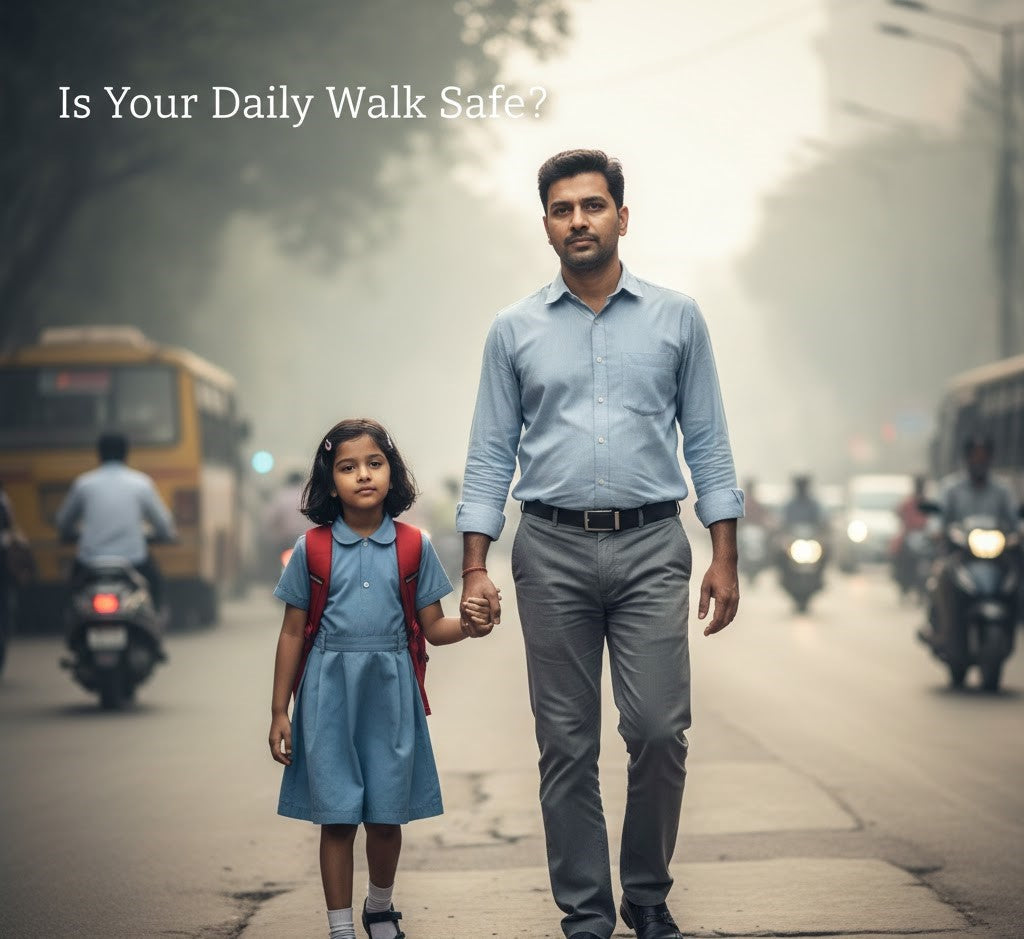
Walking to work or school seems like the healthiest commute option. No fuel costs, good exercise, zero emissions. But here is what most pedestrians do not realize about their daily walks through city streets.
You are breathing roadside air that is 3 to 4 times more polluted than indoor levels. Your exposure duration is longer than motorized commutes covering same distance. And if you are walking children to school every morning, their developing lungs are taking in pollution at rates much higher per body weight than adults.
TL;DR
Morning walk in pollution exposes pedestrians to 3 to 4 times higher particle concentrations than indoor air. Research tracking walkers with personal monitors shows exposure levels concerning for daily commuters especially children.
The pedestrian exposure reality:
-
Sidewalk level pollution 5 to 10x higher than air 50 meters from road
-
20 to 40 minute daily walk equals 140 to 280 minutes weekly in worst air zones
-
Children breathe faster and inhale more pollutants per kilogram body weight
-
Morning timing 7 to 9am coincides with temperature inversion trapping pollutants
-
Route choices can reduce exposure 30 to 40% but cannot eliminate it
This is measured data from air quality monitors carried by pedestrians in Delhi, Mumbai, Chennai. Real particle counts from breathing zones during actual daily walks.
Want to minimize exposure while walking? Keep reading.
How Risky Is Your Daily Walk to Work or School?
Morning walk in pollution creates exposure significantly higher than staying indoors or traveling in enclosed vehicles.
Pedestrian versus vehicle occupant data shows walkers breathe 3 to 4 times more pollution than car passengers on same route. No cabin filtration, no barrier, breathing zone at perfect height for vehicle emissions.
Sidewalk level exposure is concentrated. Studies found sidewalk air quality 5 to 10 times worse than measurements 50 meters from road. You walk right through densest pollution corridor.
Duration factor matters. A 2 km walk takes 20 to 25 minutes at normal pace. That is 40 to 50 minutes daily, 280 to 350 minutes weekly breathing roadside pollution.
Children face higher vulnerability. Lungs still developing, faster breathing rate meaning more air volume per minute, lower height closer to ground where heavier particles concentrate, higher metabolism meaning more pollutants absorbed per kilogram body weight.

What Makes Your Walking Commute More Polluted?
Walking commute pollution varies based on factors you can control.
Time of day impact is huge. Morning walks 7 to 9am happen during temperature inversion trapping overnight pollution at ground level. Midday walks 11am to 3pm experience 30 to 40% better air quality.
Route characteristics change exposure dramatically. Main roads have highest vehicle density meaning worst pollution. Side streets reduce exposure 20 to 30%. Routes through parks get tree filtration benefit.
Weather conditions affect dispersion. Windless days trap pollutants. Post rain air is cleanest.
How Can You Plan a Cleaner Route to Work or School?
Foot commute air quality improves significantly with smart route planning.
Side streets over main roads is single biggest factor you control. Parallel side street might add 5 minutes but reduces pollution 30 to 40%.
Park routes when available provide cleanest air. Trees absorb pollutants and create buffer from vehicle emissions.
School route planning for parents means scouting multiple options. Cleanest route not always shortest.

Protect Your Family's Daily School and Work Commute
Atovio Nova N99 Mask 99.6% filtration for adults and children. Lightweight and comfortable for 20-40 minute walks. Available in kid-friendly sizes. Washable and reusable up to 50 times.
Protect Your Family WalkWhat Are Simple Ways to Prevent Air Pollution Damage While Walking?
Prevention of air pollution damage for daily walkers combines timing and protection.
Best times for work commutes is after 10am when temperature inversion breaks or before 7am when traffic is light.
School timing considerations are harder since start times are fixed. This makes protection gear more important for children walking during peak pollution hours.
What Else Reduces Your Exposure While Walking?
Breathing polluted air damage minimization includes practical tactics.
Walking pace adjustment means moderate steady pace better than fast walking increasing breathing rate.
Breathing techniques include trying to breathe through nose for natural filtration, avoiding gasping or heavy breathing.
Post walk cleansing includes washing face and hands immediately, nasal rinse helps clear pollutants, showering removes particles from hair and skin.
Parents walking children to school daily and professionals with walking commutes need practical protection that works for 20 to 40 minutes of continuous exposure like good quality N99 masks.
How Can You Protect Yourself While Walking Daily in Polluted Cities?
Route and timing modifications reduce exposure but cannot eliminate it completely. Even the cleanest routes still have significant pollution levels, making physical filtration necessary for daily walkers.
An N99 Mask provides 99.6% filtration efficiency with breathable cotton fabric designed for comfortable walking. The atovio Nova N99 Mask lightweight construction and adjustable fit works for adults and children during 20 to 40 minute walks without causing overheating.

What Should Parents Know About Children Walking to School in Pollution?
Outdoor air pollution impact on children requires extra attention.
Why children need extra protection is developing lungs more vulnerable, faster breathing rate means higher particle intake per body weight, school timing forces walks during peak morning pollution, cumulative exposure over school years adds significant risk.
Teaching kids about air quality includes explaining why protection matters in age appropriate way, making mask wearing routine not punishment, checking they keep mask on properly, leading by example with your own protection.
Making protection comfortable for kids means properly fitting masks not adult sizes, letting them pick colors they like, practicing at home before daily use, positive reinforcement for consistent use.
Protecting Your Family Indoors Too
The atovio Nova N99 Mask can protect your family during daily walks and school commutes, but indoor air quality in homes and classrooms often exceeds outdoor pollution levels. Consider adding air purifiers to children's bedrooms and study areas where they spend hours breathing indoor air contaminated by dust, cooking emissions, and outside pollution seeping in. These air purifiers create clean air zones without the restrictions of masks, perfect for indoor activities. While commuting, consider using a wearable air purifier, these wearable air purifiers help in reducing the amount of bad quality air you breathe in. For complete family respiratory protection across all environments, explore our range at atovio.in.
Clean Air at Home Where Your Children Study and Sleep
atovio Pebble creates a 35 cubic feet bubble of clean air around your child while studying, sleeping, or relaxing. Only 50 grams. Filter-free technology. Perfect indoor protection complementing outdoor mask use.
Complete Family ProtectionKeep Walking With Protection
Daily walks do not have to stop because of pollution. You just need to walk smarter.
Side street routes over main roads. Midday timing instead of morning rush hours. Proper filtration gear for you and your kids. These are not optional extras, these are basics for urban walking now.
Your children's school commute happens during peak pollution hours. You cannot change school timing. But you can change how much pollution enters their developing lungs during those 20 minutes twice daily.
Thousands of parents and professionals across Indian cities are maintaining their walking routines while protecting their respiratory health. Smart route planning plus real protection gear makes it possible.
Your daily walk should not cost you lung health. Walk the cleaner route, walk during better hours, and walk with proper protection.
Share:
Why Do Two-Wheeler Riders Face the Highest Air Pollution Exposure?
How Can You Breathe Clean Air on Public Transport When You Can't Control Ventilation?
1 comment
m10k0b