


TL;DR
Quick Answer: Should You Stay Inside During High Pollution or Is Indoor Air Also a Problem?
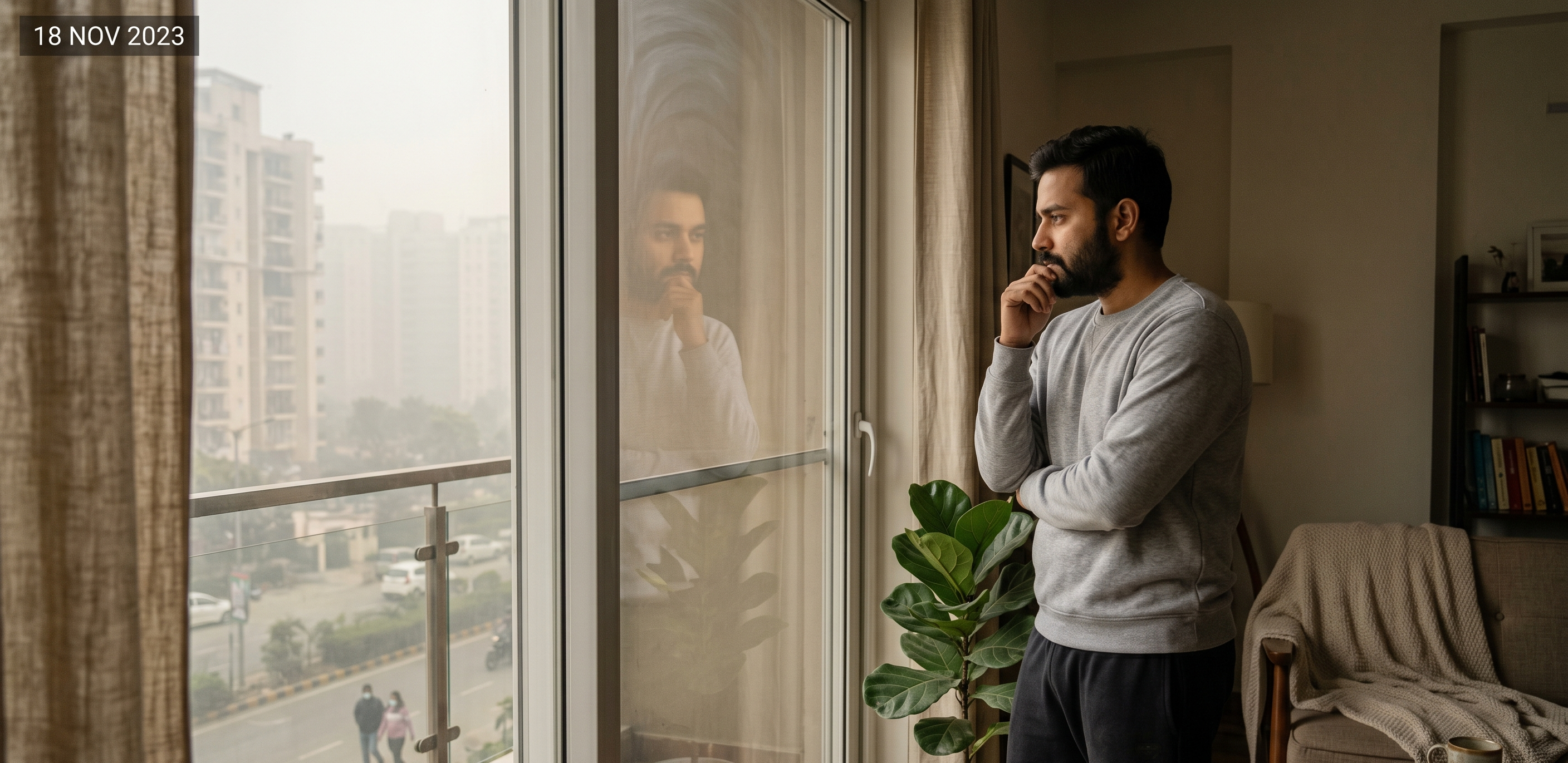
Staying indoors helps on high AQI days but only if your indoor air is actually cleaner than outside. In many Indian homes it is not. The outdoor AQI reading on your phone does not tell you what you are breathing inside your own house.
The indoor vs outdoor air reality:
-
The AQI reading on your phone reflects outdoor monitoring stations, not the air inside your home
-
Indian homes regularly record indoor PM2.5 levels 2 to 5 times higher than outdoor air depending on what is happening inside
-
Staying indoors with open windows, cooking fires, or incense burning on a bad day can mean higher exposure than stepping outside
-
Indoor air quality standards in India exist but most households have no idea what their actual indoor levels are
-
The only way to know if staying inside is actually protecting you is to measure it
The decision to stay indoors on a high AQI day is only the right call if your indoor air is actually cleaner. Here is how to figure out whether yours is.
Does the Air Quality Near Me Reading on Your Phone Actually Reflect What You Are Breathing Indoors?
Short answer is no. And honestly the gap is bigger than most people realise.
The air quality near me number on your phone is pulling from an outdoor monitoring station, probably the closest one to your location, which could easily be a few kilometres away. That station is sitting outside somewhere, measuring the air at whatever height it is mounted at, in conditions that may have nothing to do with your street let alone the inside of your flat. It is a useful rough indicator of what the general outdoor air is like in your part of the city. That is it. It is not telling you what you are breathing inside your own home and it was never designed to.
Staying Inside Reduces Outdoor Pollution. It Does Not Eliminate It.
The Atovio Pebble creates a personal clean-air zone right where you sit — treating your immediate breathing zone at home regardless of what is coming through gaps and vents. Filter-free, silent, 40+ hour battery.
See the Atovio PebbleWhat Does an Indoor Air Quality Monitor Reveal About Your Home That No Outdoor AQI App Can Show?
An indoor air quality monitor measures what is actually in the air in the specific room where it is sitting. That is a fundamentally different thing from an outdoor AQI reading.
A decent monitor will track PM2.5, CO2, temperature, and humidity in real time. What people tend to find when they first set one up is genuinely surprising. Gas stove, no range hood or open window, and PM2.5 in the kitchen can climb past 200 micrograms per cubic metre within minutes of cooking. That is Well into the Very Unhealthy range on the AQI scale. Lighting agarbatti in a closed room does something similar. And if both are happening on a day when windows are shut because of outdoor AQI, you might actually be better off outside.

Why Does Staying Indoors Not Automatically Protect You From Outdoor Air Pollution in Indian Cities?
Outdoor air pollution does not stop at the front door and this is something most people have not really thought through. Older construction in India especially has gaps, joints, and openings throughout the structure. Outdoor air moves through these continuously whether windows are open or not. It does not ask permission.
Research on air exchange rates in typical Indian urban housing shows a meaningful fraction of outdoor PM2.5 makes its way indoors within a few hours on a bad air day even with windows closed. In poorly sealed homes that fraction is higher. So closing windows and assuming you are safe on a hazardous AQI day is not actually a complete response, as the breakdown of what hazardous AQI requires in practice covers here: What Hazardous Air Quality Really Means and Why Most Indians Are Not Responding to It Correctly.
Why Do Some Indian Homes Record Worse Air Quality Than the Street Right Outside?
Indoor pollution exceeding outdoor levels sounds counterintuitive but it happens regularly and the sources are usually domestic.
Gas cooking is the biggest one. A gas stove without a functioning range hood releases PM2.5 during every cooking session. In a typical Indian kitchen where multiple meals are cooked daily, cumulative exposure from cooking alone is substantial. Add agarbatti burning in an enclosed space and the indoor air can be worse than the street on a day when outdoor AQI is moderate.
Biomass cooking is a different level of problem entirely. One cooking session on a wood or dung fire in an enclosed space can push indoor PM2.5 to concentrations that would make a hazardous outdoor AQI day look moderate by comparison. And it happens every day, multiple times, in the same enclosed space. For context on how seriously sustained indoor PM2.5 exposure should be taken, winter AQI spikes that push outdoor levels into hazardous territory are simultaneously driving indoor levels up through infiltration on the same days: Why AQI Spikes Every Winter in India and What Preparation Actually Looks Like Before It Peaks.
Why Is India's Air Quality So Bad Even in Months When No Obvious Seasonal Trigger Exists?
People often assume outside of winter the air quality problem eases significantly. It does ease compared to peak winter levels but why India's air quality is bad year-round has answers that do not go away when temperatures rise.
Vehicle density is high year-round. Industrial activity does not pause. Construction is often more active in non-monsoon months. Waste burning happens continuously. Summer atmospheric dispersal helps but does not eliminate these sources. Meaningful AQI problems are a 12-month issue, which means indoor air quality management is not a seasonal precaution.
How Does the Air in a Typical Indian Home Compare to the Country's Own Indoor Air Quality Standards?
Indoor air quality standards India sets through the National Building Code put the PM2.5 limit at 60 micrograms per cubic metre indoors. Already four times more permissive than WHO guidelines of 15.
In practice a lot of Indian urban homes exceed even that number regularly. Studies looking at indoor monitoring data find households going above 60 during cooking hours quite commonly, especially in smaller homes where the kitchen opens directly into the living area. Add regular incense use or a smoker in the house and the indoor air quality for substantial parts of the day would trigger health advisories if those readings were from an outdoor monitor. Most people have no idea because nobody is measuring and nobody is required to tell them.
Whether You Are Inside or Outside, Clean Air Has to Come With You
The Atovio Nova N99 Mask for outdoor exposure. The Atovio Pebble for indoor hours at home or work. Both environments covered — no gaps in your protection.
Build Your Full ProtectionWhat Indoor Air Quality Improvement Steps Can You Take at Home Without Expensive Renovations or Professional Help?
Indoor air quality improvement does not require replacing ventilation systems. Most of what actually works is behavioural.
Ventilating the kitchen during and after cooking makes the single biggest difference in most homes. Fifteen minutes with a window open while cooking genuinely moves the needle on post-cooking PM2.5. Agarbatti in a closed room is worth either stopping or moving near a window. Keeping the road-facing side of the flat closed during peak traffic while opening the quieter side manages how much outdoor pollution seeps in.
On days when outdoor AQI is bad and windows need to stay shut, having something actively working on the air in rooms where you spend your time makes a real difference. For those days when neither inside nor outside is reliably clean: At AQI 300, How Many Cigarettes Are You Effectively Smoking Every Single Day?.
 Whether You Are Inside or Outside, Clean Air Has to Come With You: Why Atovio Pebble Works in Both Environments
The indoor versus outdoor framing misses something practical. Most people move between both environments multiple times throughout the day and the air quality in each is different.
What you can control is the air quality in your immediate personal space. The Atovio Pebble uses anion technology tested by IIT Kanpur and is designed for the space around you rather than a whole room. At a desk with construction dust seeping in, in a bedroom where cooking PM2.5 has drifted from the kitchen, or in a workspace with poor ventilation on a high AQI day, it actively reduces PM2.5 in the zone where you are actually breathing.
For outdoor exposure when commuting or going out during elevated AQI the Atovio Nova N99 Mask handles filtration at the point of inhalation. Together they cover the two environments where most people spend their entire day.
Staying indoors on a bad air day is the right instinct. Making sure your indoor air is actually worth staying in for is the part most people skip.



Share:
Industrial Smoke and Burning Waste Are Everywhere in India. Here Is What That Air Is Doing to Your Lungs.
What Hazardous Air Quality Really Means and Why Most Indians Are Not Responding to It Correctly