


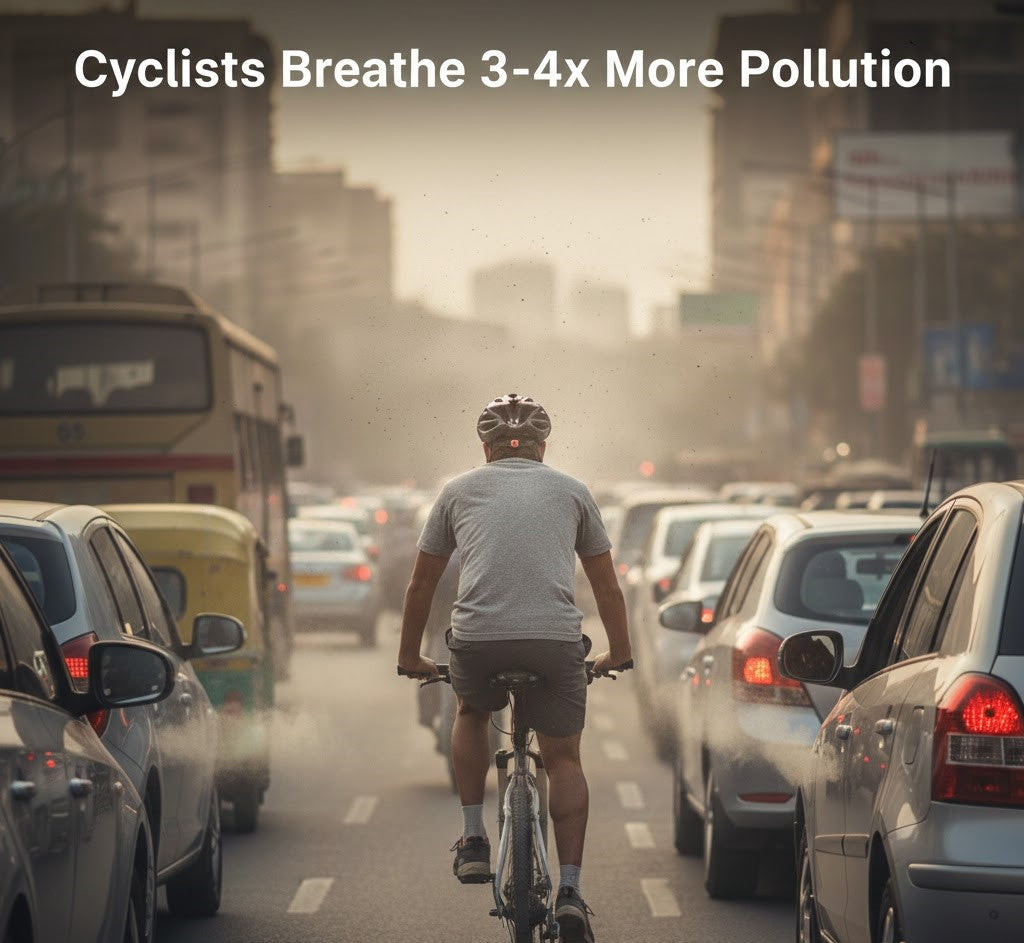
Cycling is the greenest commute option, zero emissions, great exercise, cost effective. But here is what nobody tells you about cycling in Indian cities. You are breathing 3 to 4 times more polluted air than someone sitting in a car going the same route. Your faster breathing rate from pedaling effort combined with direct exposure to vehicle exhausts means your lungs take a beating every single ride.
TL;DR
Cycling pollution protection is not optional for daily riders in Indian cities. Research tracking cyclists with personal air monitors shows exposure levels that should concern every regular rider.
The cyclist exposure problem:
-
Breathing rate 2 to 3x faster than walking means more air volume per minute
-
Mouth breathing during effort bypasses nasal filtration completely
-
Exposure height at 3 to 4 feet puts you at exhaust pipe level
-
Wind turbulence from traffic pushes pollutants toward cyclists
-
Total particle inhalation 3 to 4x higher than car passengers same route
-
Longer commute duration equals more cumulative exposure time
Studies using wearable air quality monitors on cyclists show real particle counts from breathing zones during actual commutes.. Real particle counts from the exact zone where you're breathing while cycling. Want to keep cycling without destroying your lungs?
Why Do Cyclists Need Better Protection from Pollution?
Cycling pollution protection is critical because cycling specifically increases pollution exposure compared to other commute methods actually. Breathing rate while cycling is like 2 to 3 times faster than walking. Moderate pace cycling moves 40 to 60 liters of air through lungs per minute versus 15 liters walking. That's 40 to 60 liters of polluted air every single minute.
Exposure height at 3 to 4 feet while seated puts breathing zone exactly where vehicle exhausts concentrate. Cars emit at 1 to 2 feet, trucks at 4 to 5 feet. You cycle right through densest pollution layer.
Wind patterns from moving traffic push exhaust clouds sideways into your path. You ride through pollution wakes left by every vehicle.
Longer exposure time means more total pollution intake obviously. A 10 km commute takes 20 to 25 minutes by scooter but 40 to 50 minutes by bicycle.. Double the time means double the cumulative exposure. Studies measuring PM2.5 intake found cyclists inhale way more particles than car passengers during comparable commutes. Cyclists typically inhale 3 to 4 times more particles covering the same route. Three to four times more particles going into your lungs.
Is Daily Cycling Harming Your Health in Bad Air?
Cycling in bad air causes immediate and long term effects most cyclists do not connect to riding.
Immediate effects include throat irritation during or after ride, persistent coughing especially mornings, watery eyes, unusual fatigue beyond normal exercise, headaches starting during commute.
Performance impact shows as reduced VO2 max from chronic pollution. Athletes training in high pollution show 8 to 12% lower oxygen uptake versus cleaner air. Directly affects cycling performance and endurance.
Long term consequences include accelerated lung function decline, chronic respiratory inflammation, increased asthma and bronchitis risk, cardiovascular disease from systemic inflammation, higher cancer risk from years of particle exposure.
Protection is not optional because damage accumulates silently. You feel fine today, maybe throat irritation you ignore. But lung tissue scarring and airway inflammation build over months and years. By the time symptoms force medical attention, significant permanent damage already occurred.

How Do Different Cycling Routes Affect Your Air Quality?
Bike commute air quality varies dramatically based on route choice honestly. Urban cycling on main arterial roads exposes you to highest pollution. Heavy traffic idling vehicles at signals diesel buses concentrate emissions all at once. Urban routes average 180 to 220 micrograms PM2.5 during rush hours.
Highway cycling shows slightly better quality because of traffic flow without stops. But higher speeds and truck traffic create challenges. Highway routes average 140 to 180 micrograms PM2.5.
Park and cycle track routes offer lowest pollution at 60 to 100 micrograms PM2.5. Trees provide filtration, distance from main traffic reduces exposure. Parks are 40 to 60% cleaner than parallel main roads.

Built for Cyclists Who Won't Compromise
99.6% filtration supporting higher breathing rates. Helmet-compatible secure fit. Pair with BreatheX Nasal Strips for 38% easier breathing on long rides.
Protect Your Ride TodayWhat Type of Mask Actually Works for Cyclists?
Regular masks fail for cyclists because of breathing demand. Cloth and surgical masks do not filter PM2.5. Basic N95 creates too much breathing resistance. You pull mask away to breathe defeating the purpose.
What cyclists need in cyclist pollution mask is N99 or higher filtration to block PM2.5, high breathability supporting increased breathing rate, secure fit staying in place during cycling motion, comfort for 30 to 60 minute wear, weather resistance for rain and humidity.
Most masks fail at least one requirement making them impractical for daily cycling.
What Are the Best Protection Solutions for Daily Cycling?
Proven Ways to Protect Yourself While Cycling
The atovio Nova N99 Mask filters 99.6% of PM2.5 and vehicle emissions through 6-layer EAPI filtration technology with breathable cotton fabric that supports higher breathing rates during cycling. The secure adjustable fit stays in place during rides without constant adjustment.
For competitive cyclists and long-distance riders who need maximum breathing efficiency, pairing the N99 mask with atovio BreatheX Nasal Strips reduces breathing resistance by opening airways while maintaining full filtration protection. This combination works particularly well for training rides, daily commutes exceeding 10km, and all-weather cycling conditions.

Smart Solutions: Which Protection Fits Your Cycling Style?
Choose N99 Mask if budget conscious wanting proven protection, doing short commutes under 10 km, cycling casual pace, comfortable wearing masks 30 to 45 minutes.
Choose N99 Mask and also Nasal Strip if: Doing long-distance rides over 15 km daily, performance-focused needing optimal breathing, training regularly in polluted conditions, want maximum protection with enhanced comfort.
For extreme pollution days (AQI 200+): Use both N99 mask and nasal strip together for maximum protection. Consider reducing ride duration or choosing indoor alternatives when AQI exceeds 250.
What Can Cyclists Do Daily to Protect Against Pollution?
Before ride check real time AQI and plan route, choose parks or side streets on high pollution days, time ride for 10am to 3pm when possible, put on protection before starting.
During ride maintain steady breathing pace minimizing gasping, avoid drafting directly behind vehicles, take cleaner route even if slightly longer, stay alert to pollution symptoms.
After ride shower immediately removing particles from skin and hair, nasal rinse clears pollutants from passages, hydrate well helping body process toxins, clean mask or change Nasal Strip for next use.
Should You Stop Cycling in Polluted Cities?
Short answer is absolutely not. Cycling with proper protection provides net health benefit even in polluted conditions. Cardiovascular fitness, mental health, and environmental benefits outweigh pollution risks when you protect yourself properly.
Beyond Cycling: Complete Daily Protection
The N99 Mask solves your cycling commute protection sure, but what about indoor air quality at your workplace or home? Many cyclists are surprised to learn that indoor air can be like 2 to 3 times more polluted than outdoor air.. Consider pairing your cycling protection with wearable air purifiers for your desk at work or bedside at home. These portable air purifiers create clean air zones in enclosed spaces where traditional masks aren't practical for hours at a time. One can use an air purifiers at home or at their office, where they spend most of their time. For comprehensive respiratory protection covering cycling, office, and home, explore the complete range at atovio.in.
Clean Air Beyond Your Cycling Hours
Wearable air purifier for office and home recovery. Creates clean air zone wherever you are. Filter-free technology. Perfect for cyclists' complete protection.
Explore Complete ProtectionKeep Cycling With Confidence
Cycling pollution protection technology exists that actually works for daily riders in Indian city conditions. You do not have to choose between cycling and lung health.
The atovio Nova N99 Mask and atovio BreatheX Nasal Strip were designed for cyclists who refuse to give up riding but refuse to accept lung damage as inevitable cost.
Your cycling should not come at price of respiratory health. Protect yourself properly and ride with confidence knowing lungs are defended. For comprehensive protection across all commute scenarios, see our complete commuter guide.
Share:
When Is the Best Time to Exercise Outdoors in Polluted Cities?
How Can Runners Protect Their Lungs While Running in Polluted Cities?